Canada’s biggest rural film festival is bringing five days of films, workshops, music, and more to Gimli this summer. From July 22 through 26, the Gimli International Film Festival (GIFF) is an opportunity to be immersed in a diverse range of short films, movies, and documentaries from around the world — or just hang out with some friends, and catch a free screening on the beach.
The festival fills Gimli with thousands of filmmakers, cinephiles, and everyone in between, offering something for everyone. Networking and learning opportunities for industry professionals, premiere screenings for cinema lovers, and an unbeatable sense of community for everyone.
While larger-scale film festivals can feel fragmented and commercial, GIFF’s beach screenings, workshops, networking events, afterparty, and small-town location make it uniquely social.
“I look at it three ways,” said Ande Brown, a Manitoban filmmaker. “I like talking to people, I like learning, and then I just like seeing the different films people are making.”
Last year, Brown won the RBC Emerging Filmmakers pitch competition, an annual event at GIFF. It was his first time pitching a short film idea, but his third year attending the festival — which he said is a great place to see films you wouldn’t find anywhere else.
“You’re exposed to films that you wouldn’t normally see in [the] theatre,” said Brown, of the festival’s short film program. “I just like [the] variety, ’cause, you know, things in the theatre are being picked by heads of studios and people who are really focused on money.”
GIFF, run by a team of more than 80 volunteers and 18 employees, is very intentional with its programming. Teya Zuzek, the festival’s executive director, said they typically get more than 1,400 film submissions to choose from, and do research into other films on top of that.
Zuzek said their goal is to leave the audience feeling “empowered, educated, and inspired.” To do so, specific “programming pillars” are kept in mind: films with woman or non-binary directors, focused on environmental or social justice issues, or spotlighting Icelandic or circumpolar cultures.
Because the five-day program is packed with more than 100 screenings, Brown recommended doing a bit of planning beforehand to have the best experience.
“I think it’s good to look at the films that are being shown, and really put some thought into what you want to see,” said Brown. The festival is spread between a few venues and has overlapping show times, making it impossible to catch every screening.
One of Brown’s favourite parts of GIFF is exposing himself to unique and unexpected films he wouldn’t normally see.
“You should always stay curious,” said Brown, “always be learning, always keep an open mind.”
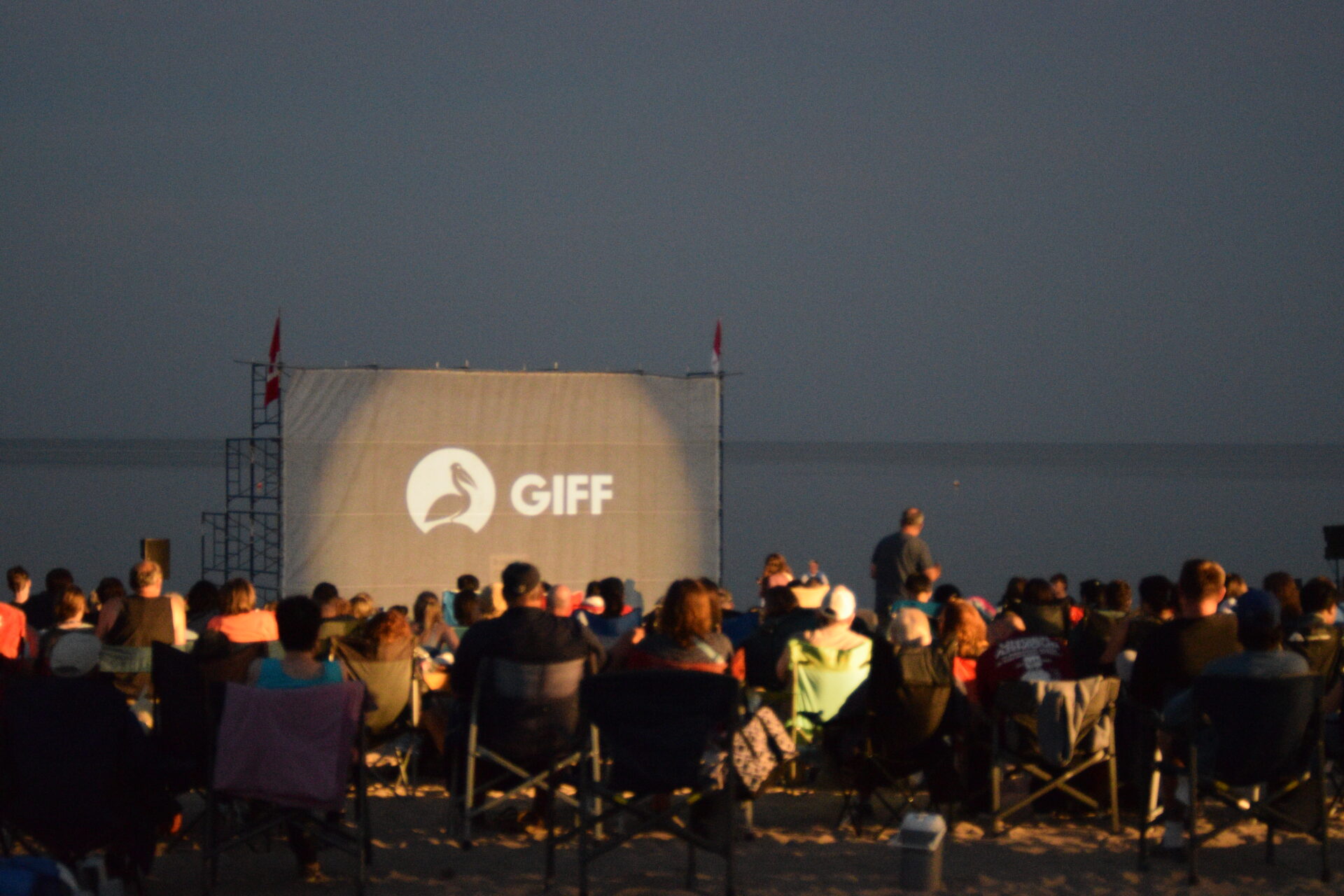
While the festival’s main screenings are lesser-known, empowering selections from around the world, the free beach screenings put a classic on the big screen each night.
Each year, the beach fills up with lawn chairs in the back, and picnic blankets in the front. A massive projector screen, set back over the shallow water of the lake means the film can be seen well from a distance — and the rising moon or northern lights have made for a spectacular backdrop in past years.
GIFF also partners with The 48 Film Festival, a yearly challenge in which more than 30 teams of Manitoban filmmakers each create a short film in 48 hours. The best submissions are premiered in Gimli each year as part of the festival — and many of the filmmakers attend to socialize, network, and see other teams’ short films.
Brown urged aspiring and emerging filmmakers to take advantage of the festival’s networking and learning opportunities, which are open to everyone — including those with little or no experience in the industry.
“You just never know who you’re gonna meet,” said Brown. The networking events and workshops have been popular among Manitoban filmmakers in recent years, making them a great place to connect with potential collaborators — or simply mingle with like-minded creatives.
Some screenings also include Q&As with the filmmakers, which Brown noted as a great way to learn about a specific genre or topic.
“So many filmmakers are just so happy to talk about their work,” said Brown, who enjoyed talking with filmmaker Matthew Rankin during GIFF last year.
“It’s like everything in life,” said Brown. “You make the most of it, right?”
For Brown, making the most of it last year included winning the RBC Emerging Filmmakers pitch competition.
“It was really scary to stand up there and give that pitch, but, there’re times in life where you need to scare yourself, and just see what you’re capable of,” said Brown. As the winner, he received $15,000 to fund his short film Half-Naked, a semi-autobiographical comedy about a trans man navigating the anxiety of going shirtless in public for the first time.
Zuzek encouraged attendees to take advantage of their round-trip shuttle service, which brings people to and from the festival. The shuttle leaves each morning, stopping at two pick up spots in Winnipeg, and one in Winnipeg beach; then returns in the evening. This year, GIFF also partnered with Peg City Car Co-op to offer discount codes for those using a co-op vehicle to get to the festival.
Tickets for individual screenings and passes for the entire festival — including discounted prices for youth, seniors, and industry members — can be purchased online.
Learn more about the festival at gimlifilm.com.