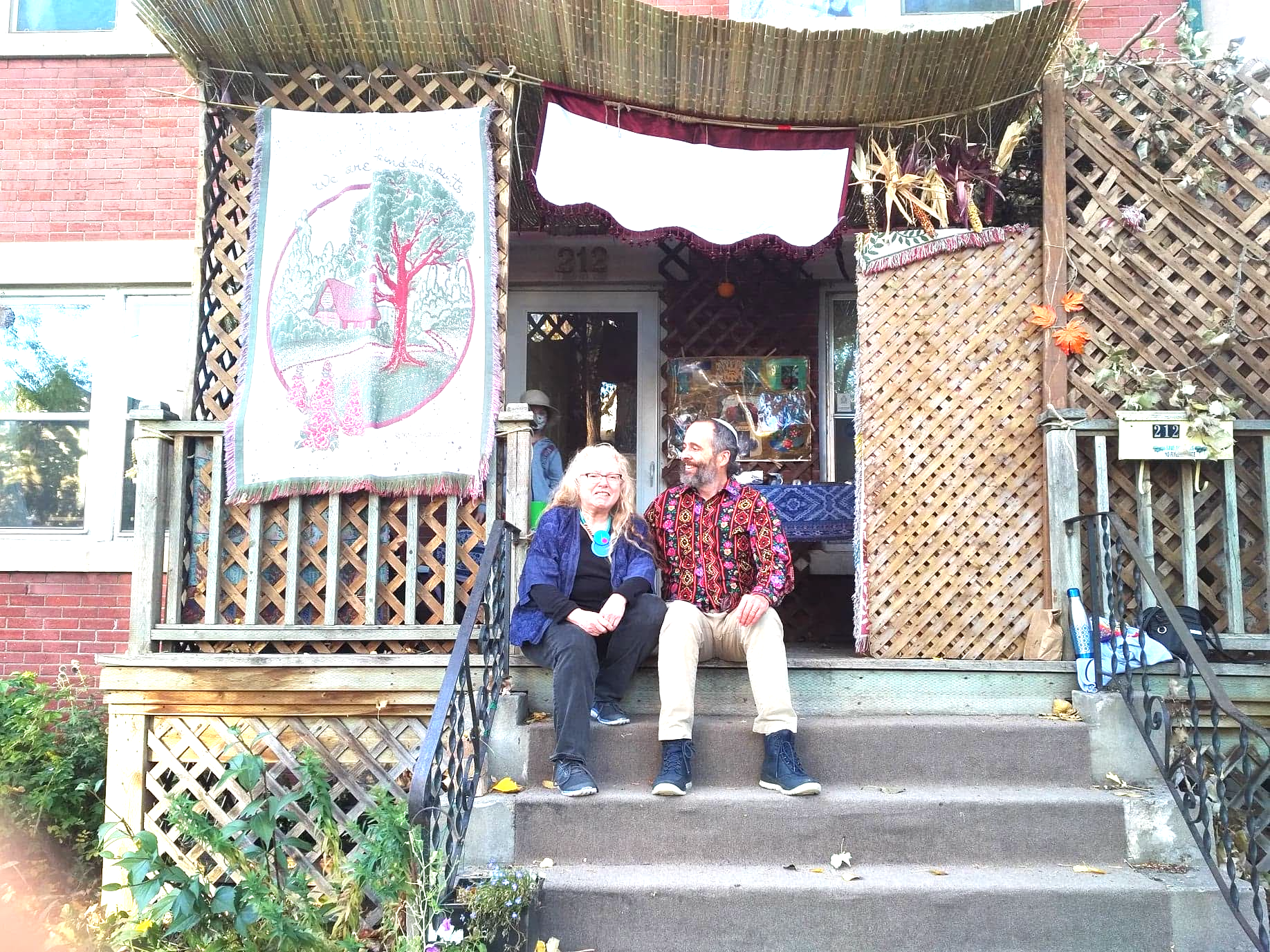
When it comes to creating and celebrating the holiday Sukkot, which Justin Jaron Lewis and his wife Jane Enkin celebrate as “a harvest festival,” a favourite aspect of one of the traditions that takes place at the end of the festival, for Jane in particular, is that she is pretty sure that nobody knows where it comes from.
“I love knowing every possible meaning for the sukkah, the temporary structure we build. I like the symbolism of the sukkah (but) with the beating of the willows, I like to think nobody knows.”
The beating of five sticks of willows on the floor on the last day of the seven day Sukkot festival, she says, is so old, it is mentioned in centuries-old texts, but without much explanation. But that is something that adds to the mysticism, and the fun, of the annual celebration, the couple says.
A sukkah is a specially constructed temporary structure (which can be with 2 1/2, 3 or 4 walls) built with a thatched roof with natural, unaltered materials, such as branches that are not tied down, which must be partially open – so that the stars can be seen every evening.
Jane and Justin used to build a sukkah in their backyard, but moved it to the front when COVID restrictions required further distancing. Because their front deck is bigger, they could still host guests for meals that Jane prepared in the sukkah. “This [festival] is called the ‘season of our joy,” explains Jane, and says it pushes her to do things differently, to enjoy the natural environment around her home and garden.
Another benefit, said Justin, is that more people have been introduced to their Sukkot celebration, with people noticing the unusual structure, and sometimes hearing traditional Sukkot songs that are sung during meals.
Justin says neighbours have contributed to their structure too, sharing lattice boards which, like the roof, also let in light.
The structure harkens back to the harvest of fruit, but also is associated with the biblical story of Jews wandering in the desert for 40 years.
“It’s also a representation of the presence of God. The feminine aspects of God – the motherly presence sheltering us and surrounding us, like a womb…there’s all these aspects to the history and the very deep spirituality of it, and also just the fun of it,” explains Justin.
This year the festival falls earlier than it did for the past two years, and because of the warmer weather, Ben Baader expects that he may be welcoming more people into the sukkah that he builds every year on the roof of the Old Grace Housing Coop. The ceremonial traditions are something that he personally has fallen more and more in love with.
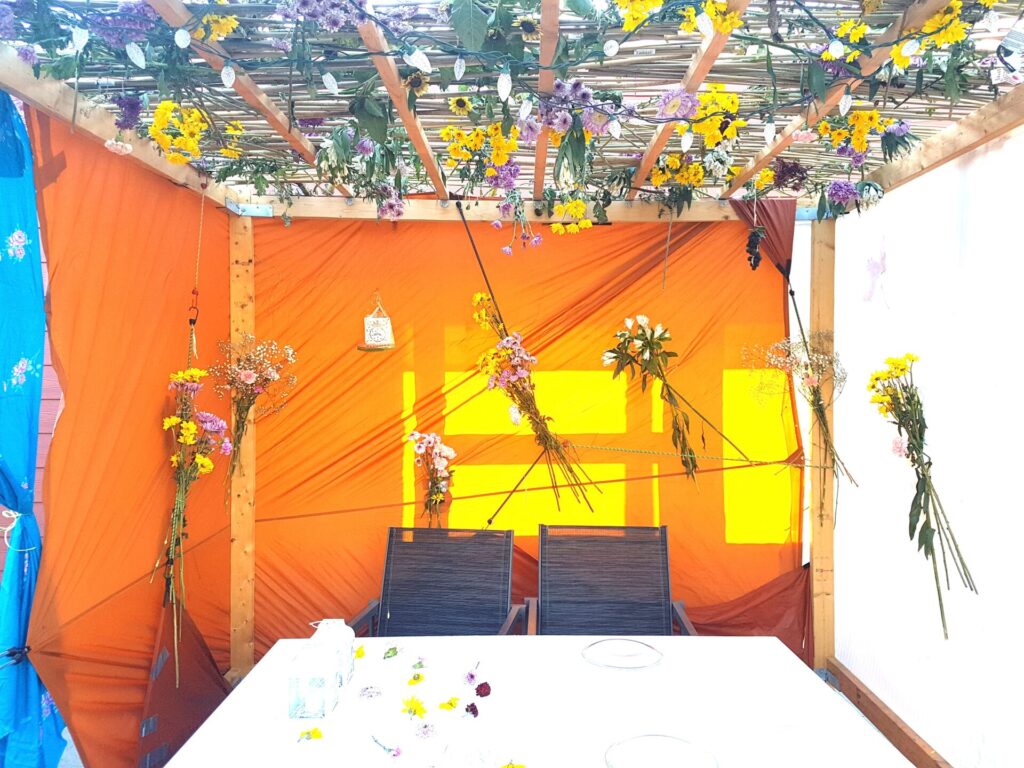
He says that the sukkah is filled with cosmic light and divine presence, and in the sukkah one can connect with people who have passed on.
He usually decorates the sukkah with flowers and during prayer in the sukkah, waves a ctiron fruit, willow and myrtle branch, and palm frond bundle, as is the custom. It is also another mystical custom that has always brought Jane and Justin joy.
There are many teachings about Sukkot, but Jane and Justin and Baader point to the fragility of the sukkah structure that demonstrates the impermanence of our lives, the necessity of joy, and the importance of working towards peace no matter how fragile it may be, and justice. And this year, they are looking forwards to a little less snow in their sukkahs. Sukkot starts September 25.
Top photo: Justin and Jane share their celebration of the harvest with friends and neighbours during the Sukkot festival (photo provided).