Cover photo by Cohen Berg
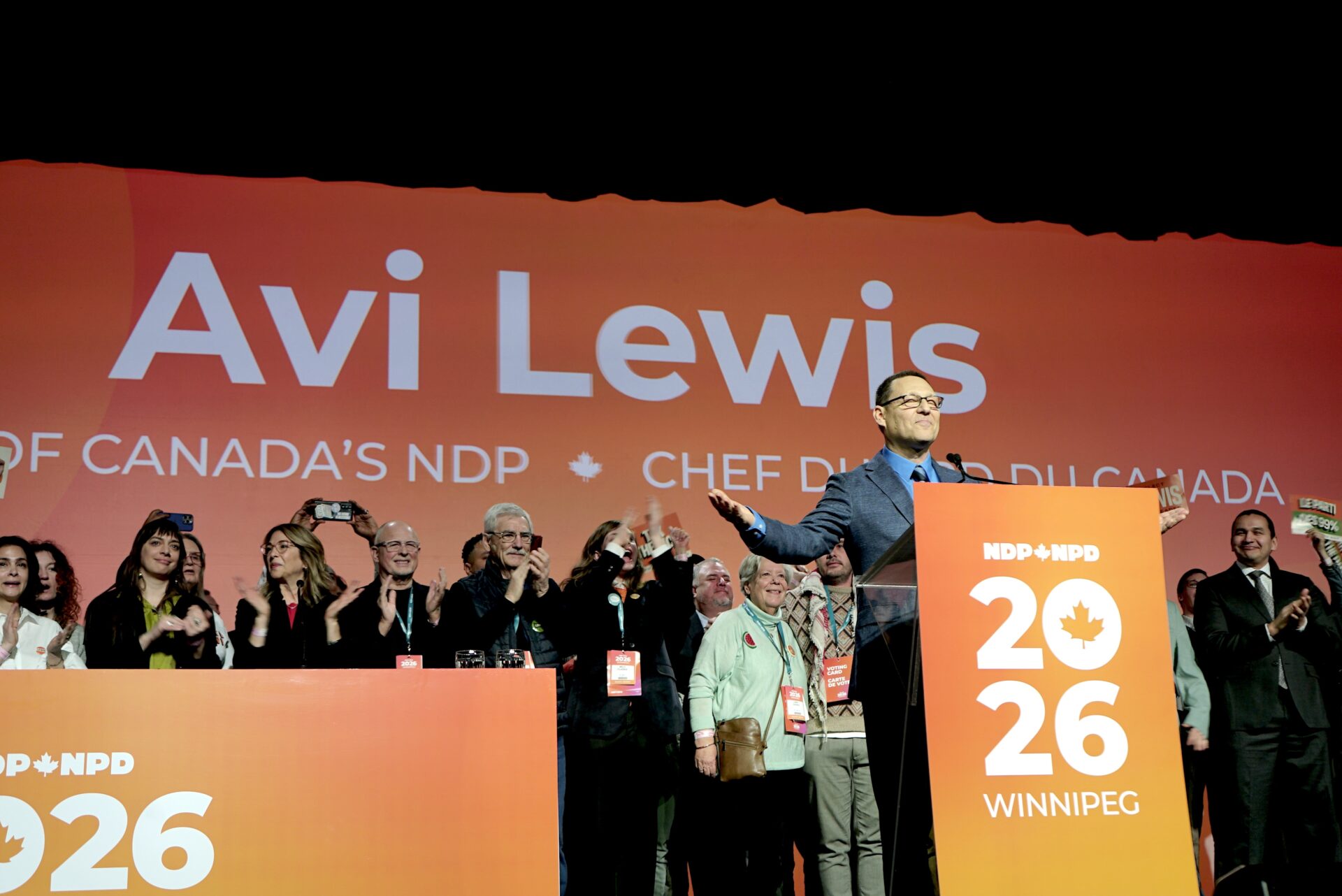
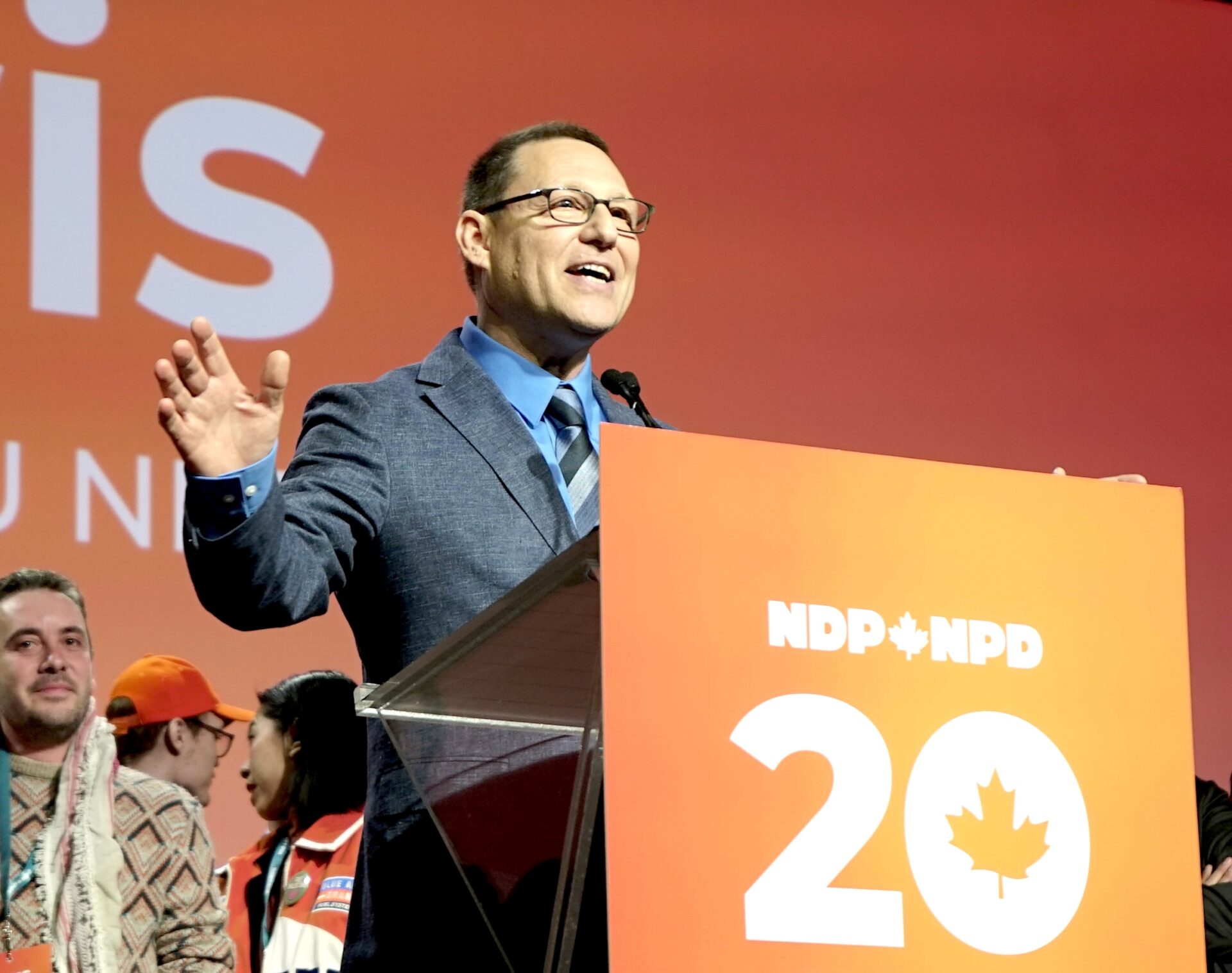
Last weekend, filmmaker and journalist Avi Lewis — a democratic socialist with a bold campaign focused on moving the party further left — was elected leader of Canada’s NDP.
Lewis defeated four other candidates in a decisive leadership election held at the NDP Convention in Winnipeg, announced to a passionate standing ovation. He now faces the tall task of rebuilding the diminished party after its historic loss in the 2025 federal election.
Lewis’s family roots extend far back into the party’s history, his grandfather, David, a former leader of the federal NDP, and his father, Stephen, a former leader of the Ontario NDP.
“We are building a new foundation for our party, and we are ready to come roaring back on the Canadian political stage,” Lewis said shortly after winning.
Delegate Zhanina Bergu said she has always voted NDP but has never been “super excited” about the movement until now.
What is Lewis promising?
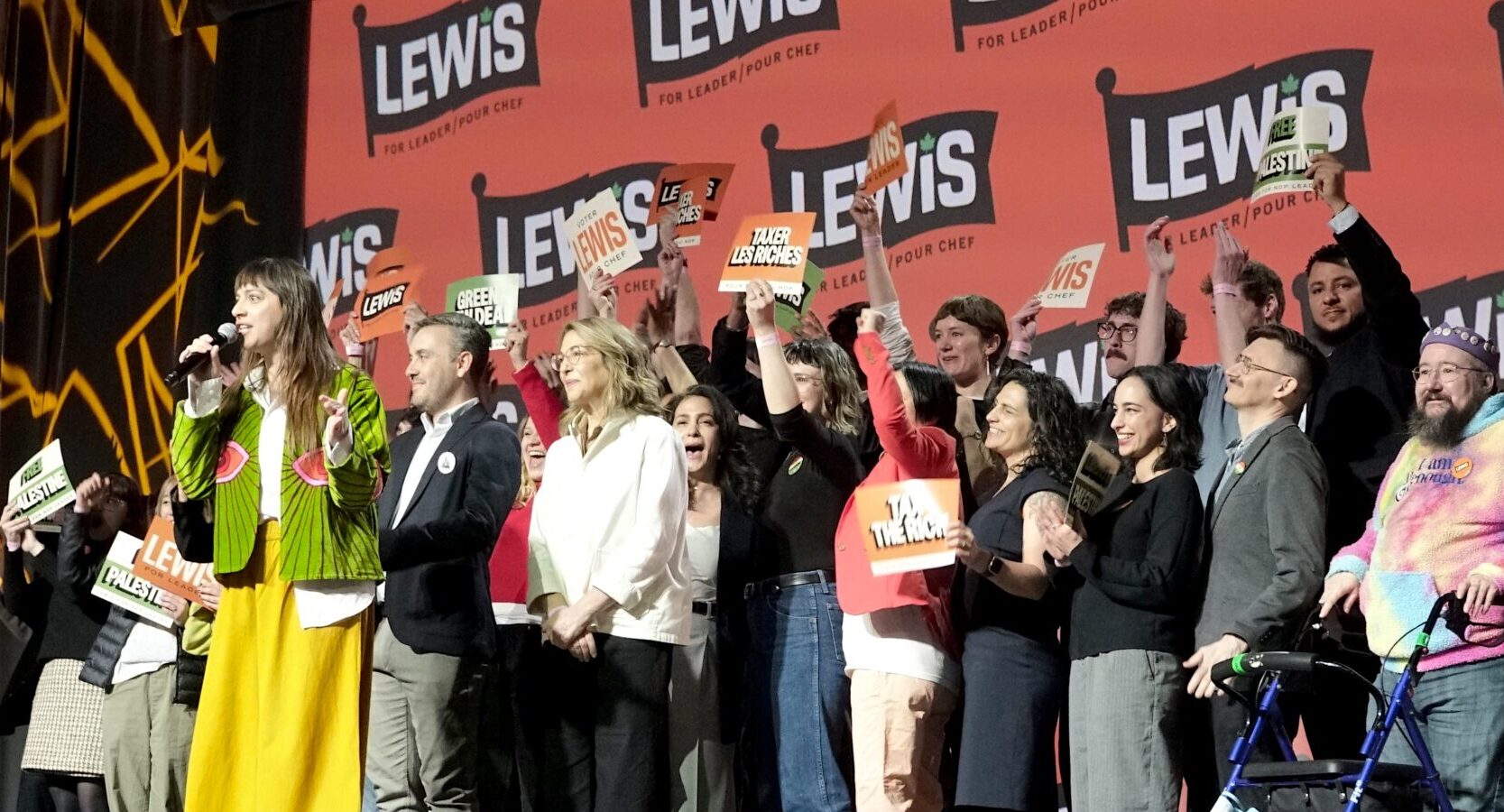
With a campaign slogan of “For the Many, Not the Money,” Lewis campaigned on moving the party further left with bold criticisms of billionaires and large corporations that “dominate every sector of our economy.”
“I see a movement,” said Winnipeg NDP MP Leah Gazan, “and it’s because Avi speaks truth to power and has offered up real solutions.”
One of Lewis’s most unique promises is the plan to massively expand public services and pay for them by taxing the rich. Government-owned and operated grocery stores, phone plans, banks, and pharmacare to disrupt monopolies held by the corporations currently offering them.
“I know every politician says they feel your pain, and they claim to be outraged by the sky-high price of everything,” said Lewis in his victory speech. “But what they won’t talk about is why: an economy that’s rigged for the rich, leaving the vast majority of us behind.”
Lewis is an advocate of workers’ rights, a wealth tax, expanding free healthcare, free transit, “powerlines not pipelines,” Indigenous rights, and building “non-market housing” that’s off-limits for corporations. Delegates at the convention repeatedly expressed passionate support for these ideas.
Manitoba Premier Wab Kinew threw his support behind Lewis after the election, telling reporters he thinks the new leader will be “a great voice for the country.”
Lewis has been outspoken against fossil fuels, Israel’s attacks on Palestine and Iran, artificial intelligence, and billionaires. He has called Prime Minister Mark Carney “elbows down” when it comes to Canada-U.S. relations, and promised a much more aggressive approach to cutting ties with the U.S. and increasing Canadian sovereignty.
Within the NDP, Lewis promised to make the party more transparent, and engage in year-round training and organizing to stay prepared for elections no matter when they’re called.
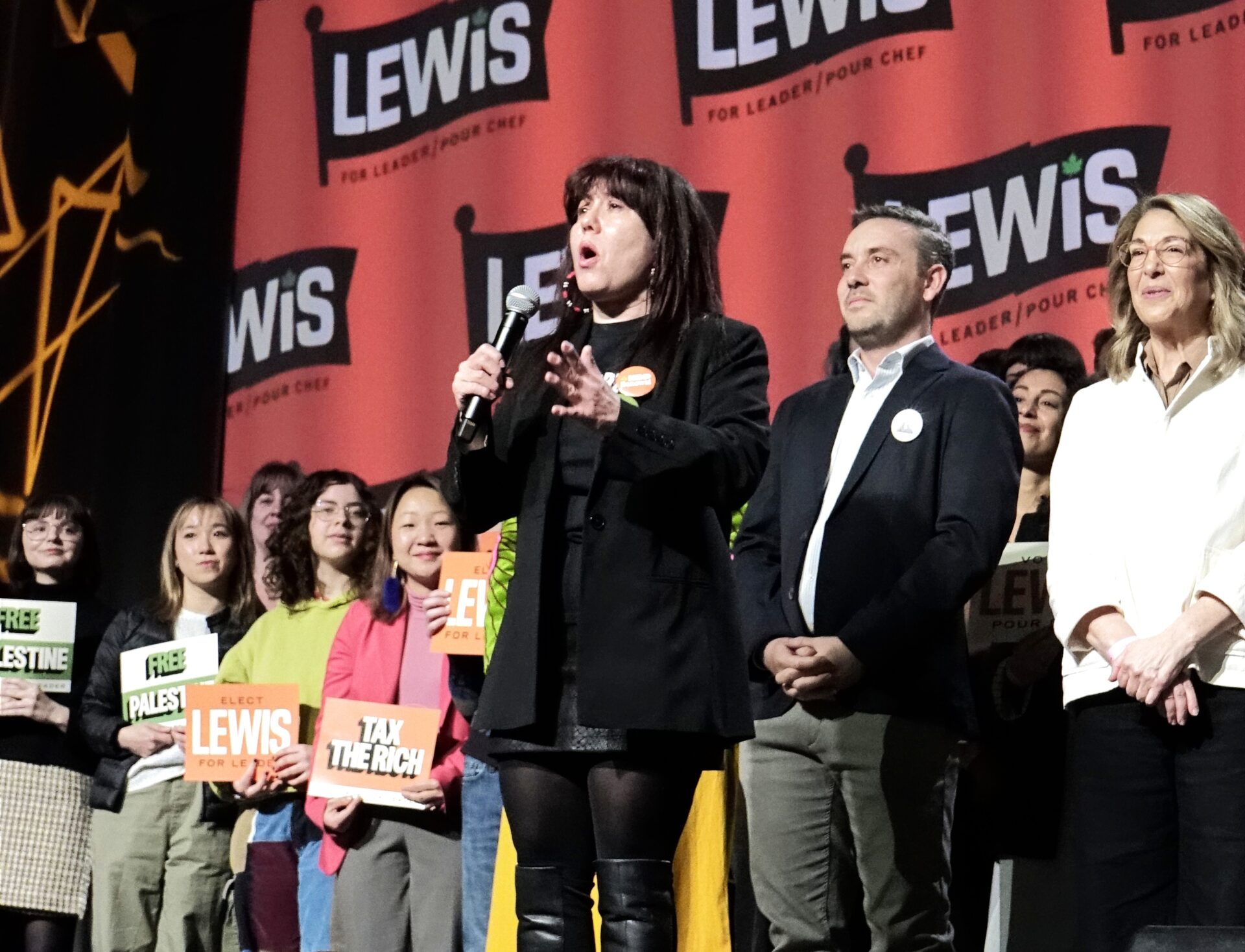
Notable politicians, communicators, and activists have endorsed Lewis, including David Suzuki, Libby Davies, and Leah Gazan.
Criticisms of Lewis
Though Lewis has had a notably successful campaign and garnered more votes than all four of the other leadership candidates combined, he’s received his fair share of criticism.
People on both sides of the political spectrum have expressed views that he is too left-leaning. Existing NDPers have voiced concerns that he won’t be able to win over Liberals and Conservatives with such left-wing policies, and those on the right have called him “absurd,” “communist,” and an “extremist” for his anti-militarism and anti-fossil fuel “eco-socialist agenda.”
As the Carney government drifts further right, Lewis has noted that the left lane is open and wants to present the NDP as a bold option that stands apart from the Liberals.
In an interview with CBC, Lewis said he thinks the NDP “may have been a little too polite” in the past, and it “ended up with a situation where in some cases people didn’t know what we stood for.”
Provincial NDP leaders have criticized Lewis for what they call an “ideological and unrealistic” stance on fossil fuels. Alberta NDP Leader Naheed Nenshi and Saskatchewan NDP Leader Carla Beck both published criticism of Lewis within hours of his election victory, stating his fossil fuel policies are “not in the interests of Alberta” and would “hurt Saskatchewan workers.”
Nenshi, Kinew, and B.C. Premier David Eby have all since acknowledged that though they don’t see eye to eye with Lewis on fossil fuels, they’re open to working with him.
Lewis wasn’t concerned by the lack of agreement and said his “doors are open” to those opposed to him. He said there’s room for differences within the NDP, and highlighted that federal and provincial governments deal with very different political and economic situations.
“We don’t have to agree on every little thing in order to do big things together,” said Lewis.
Though he has run twice, Lewis has never been elected as a Member of Parliament and has been called out for his lack of experience as a politician. Throughout his life, he’s been a filmmaker, journalist, activist, and educator, advocating for the same issues his campaign revolves around. Lewis has said he thinks his status as an outsider is an asset and a much-needed change.
Rebuilding a defeated party
In Canada’s last federal election, the NDP was decimated with their worst results ever: electing just seven of their previous 24 MPs and losing official party status. After NDP MP Lori Idlout crossed the floor to join the Liberals, the party has only six MPs in the House of Commons today.
Rebuilding and revitalizing the defeated party is now Lewis’s first priority.
In his victory speech at the convention, Lewis pledged to take on the challenge by telling a story about his father and grandfather.
“[My father] told me something kind of heartbreaking that David, his father, said to him once. David said, ‘Son, not in my lifetime, but maybe in yours.’ And recently, my dad told me the same thing. ‘Not in my lifetime, maybe in yours,’” said Lewis.
“Well, Dad, I refuse to tell that to my kid.”
Before the convention, an Angus Reid survey reported that about a quarter of past NDP voters said the party is “irrelevant,” while 44 percent didn’t recognize the names of the leadership candidates — including Avi Lewis.
Meanwhile, Carney’s approval continues to rise, recently hitting 68%. Lewis acknowledged Carney’s popularity and said he is a “reassuring figure” during a time when “Canadians are scared” and “have reason to be,” citing foreign wars and economic pressure from the U.S.
Though Lewis is facing a steep challenge, not all the numbers are discouraging.
In his leadership election victory, Lewis captured 56 percent of the vote, a decisive majority.
During his leadership campaign, Lewis and his team raised more than $1.2 million, nearly double Jagmeet Singh’s record-breaking fundraising in 2017.
“This has been a seven-month marathon at the speed of a sprint,” Lewis said of the campaign.
Lewis was brought into leadership at the three-day NDP Convention in Winnipeg, where over 2,000 people came together to debate party policies and elect a new leader.
“People were talking about how much this party [was] decimated. But when I see this kind of crowd, I really feel hopeful,” said delegate Sam Sambasivam at the convention. Having lived in Canada for 53 years and attended “almost every convention since then,” he said this one felt distinctly different.
Lewis is a skilled communicator, with experience advocating for bold ideas that have garnered passionate support and fiery criticism — but lacks experience bringing those ideas into government. As the new leader of Canada’s diminished NDP in an increasingly chaotic political climate, he has some major obstacles ahead.
In his victory speech, he said he’s up for the challenge.
“The NDP comeback starts now.”